Analyse de marché
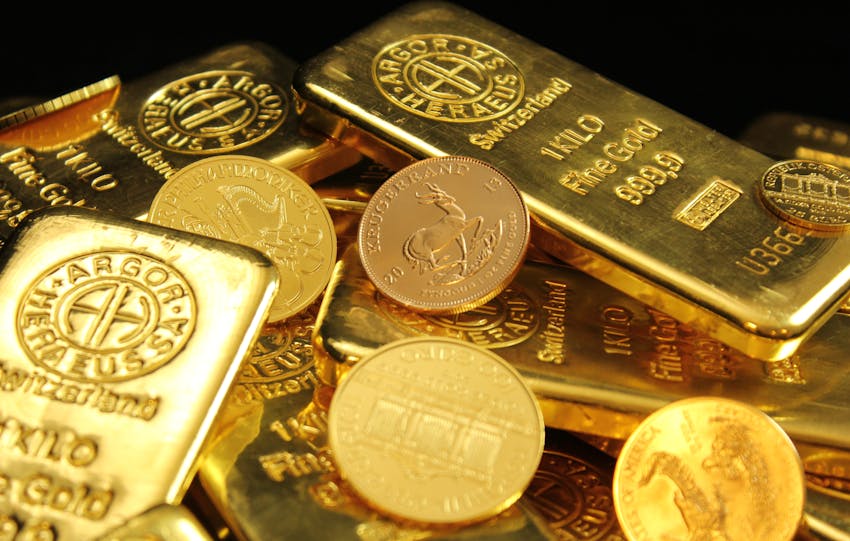
In a podcast discussion, Mike Maharrey of Money Metals interviewed Brian Lundin, President and CEO of Jefferson Financial, regarding factors influencing the gold and silver markets. Lundin argued that long-term monetary trends, rather than short-term geopolitical events, fundamentally drive metal prices.
While global conflicts like tensions involving Iran caused brief spikes in gold prices (e.g., reaching around $5,400 before retreating), geopolitical shocks typically result only in temporary volatility as traders quickly enter and exit positions. The core and historical reason for holding gold remains protection against the loss of purchasing power in fiat currencies.
Lundin characterizes the current environment—marked by rising government debt, persistent deficit spending, and central bank intervention—as the late stages of an extended monetary cycle. Current gold price increases reflect this structural reality. He asserts that gold’s bull market, now about two years old, has remained historically stable, experiencing only two minor pullbacks of around 10%. This stability is partly attributed to continuous central bank buying, as governments worldwide accumulate gold as a hedge against financial and geopolitical risks, particularly concerning the weaponization of the US dollar.
The recent entry of Western institutional investors has added volatility, creating large waves in buying and selling. Technically, gold is currently consolidating, and Lundin anticipates it might remain range-bound for a couple of weeks before attempting another upward move. Deeper monetary factors driving the market include the soaring US federal debt, where interest payments now exceed defense spending.
Lundin predicts continued deficit growth, necessitating further money supply expansion to finance it. He emphasizes that inflation is fundamentally an increase in the money supply, with consumer price inflation being only a symptom. Gold acts as a sensitive barometer for monetary instability, often reacting to liquidity expansions (like post-COVID stimulus) long before consumer price inflation materializes.
Lundin referenced Robert Prechter’s analysis to illustrate the declining purchasing power of fiat currency. When measuring major stock indices in US dollars, they hit nominal highs in 2025, but not when measured in gold. In gold terms, major indices currently trade at levels comparable to the 1930s and 1940s, suggesting gold remains a stable yardstick while currencies lose value.
Silver presents a dual dynamic as both an investment asset and an industrial commodity. While recessionary concerns might dampen industrial demand temporarily, Lundin sees exceptionally strong long-term fundamentals. For the first time, industrial consumers across sectors like solar power are directly competing with investors for limited physical silver supplies, as traditional surface inventories have sharply declined. Industrial users often must meet investor demand prices to secure necessary inputs.
This structural shortage could push silver prices significantly higher, with some industry reports suggesting prices between $125 and $135 per ounce could start impacting solar panel economics. A major current force supporting precious metals is the need for debasement protection. Institutional investors, after years of ignoring gold, are increasingly recognizing the risks posed by massive public debt and currency devaluation. Given that global investment capital is significantly larger now than in 2008, even a small reallocation (1-2% of portfolios) into precious metals by large funds could inject massive capital into the relatively small gold and silver sectors, potentially driving years of growth alongside central bank accumulation.
In conclusion, while geopolitical shocks cause short-term noise, the long-term outlook for precious metals is underpinned by fundamental economic realities: escalating government debt, monetary expansion, and rising demand from central banks and institutions. Lundin suggests the financial world is finally acknowledging trends that gold investors have focused on for decades, viewing gold now as an asset with no viable alternative.