XRPL (XRP Ledger) powers regulated Electronic Money Tokens (EMTs) under frameworks like the EU’s MiCA regulation through a native, efficient, and compliance-focused token architecture. Unlike programmable smart-contract platforms, XRPL embeds token issuance, transfers, liquidity, and regulatory controls directly into the protocol. This design delivers 3–5 second finality, sub-cent fees, and institutional-grade features without external layers.
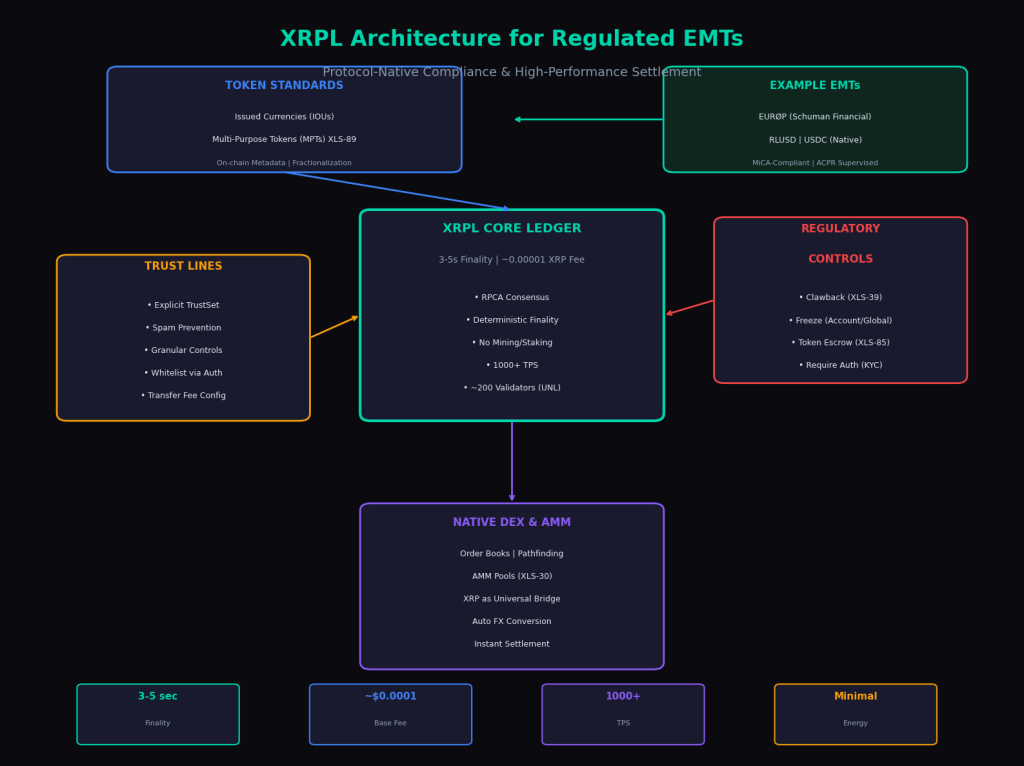
Examples include MiCA-compliant euro EMTs like EURØP (issued by licensed Schuman Financial under ACPR supervision, with KPMG-audited reserves) and others such as RLUSD or USDC natively on XRPL. These stablecoins operate as on-chain representations of fiat reserves, with full redeemability handled off-chain by the issuer.
Core Ledger and Consensus Architecture
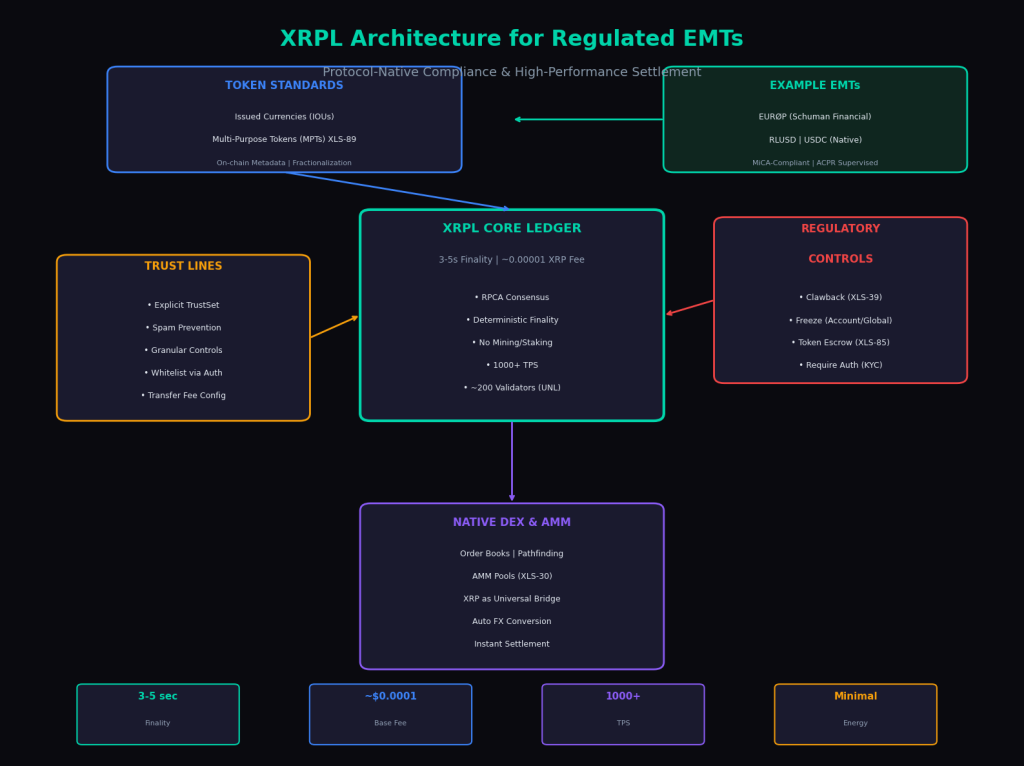
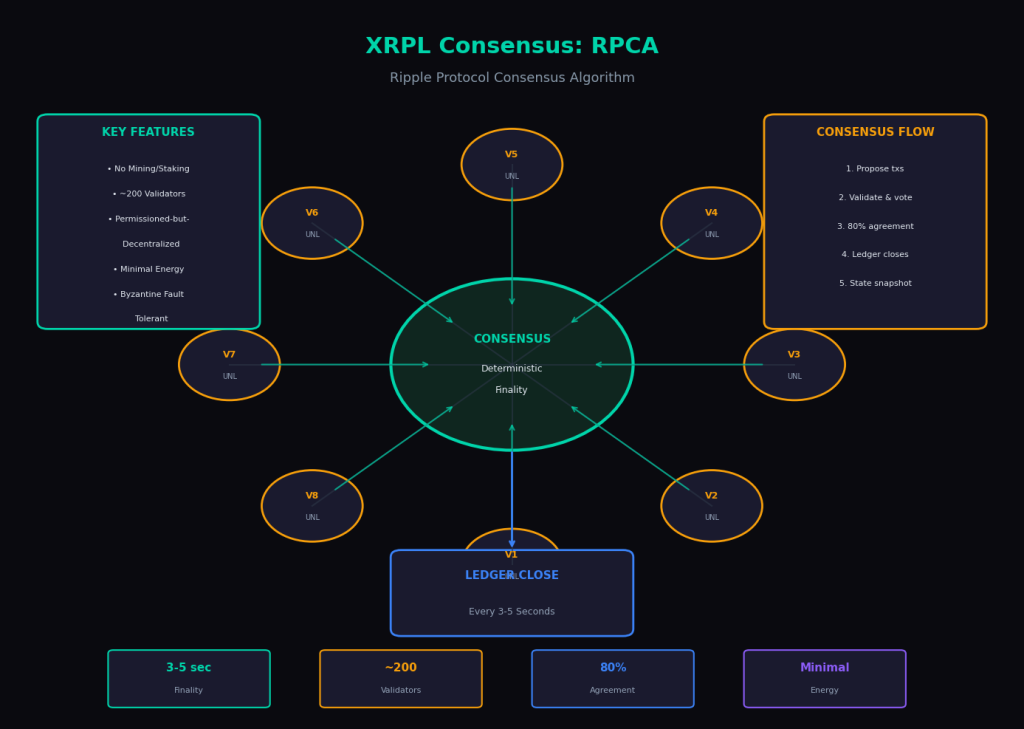
XRPL uses the Ripple Protocol Consensus Algorithm (RPCA): a permissioned-but-decentralized network of ~200 validators (via a Unique Node List) achieves deterministic finality in seconds with minimal energy use. Every ledger closes with a validated state snapshot of accounts, balances, trust lines, offers, and escrows. No mining or staking is involved—transactions are cheap (~0.00001 XRP base fee) and scale to thousands per second. This makes XRPL ideal for high-volume stablecoin payments and settlements required by regulated EMTs.
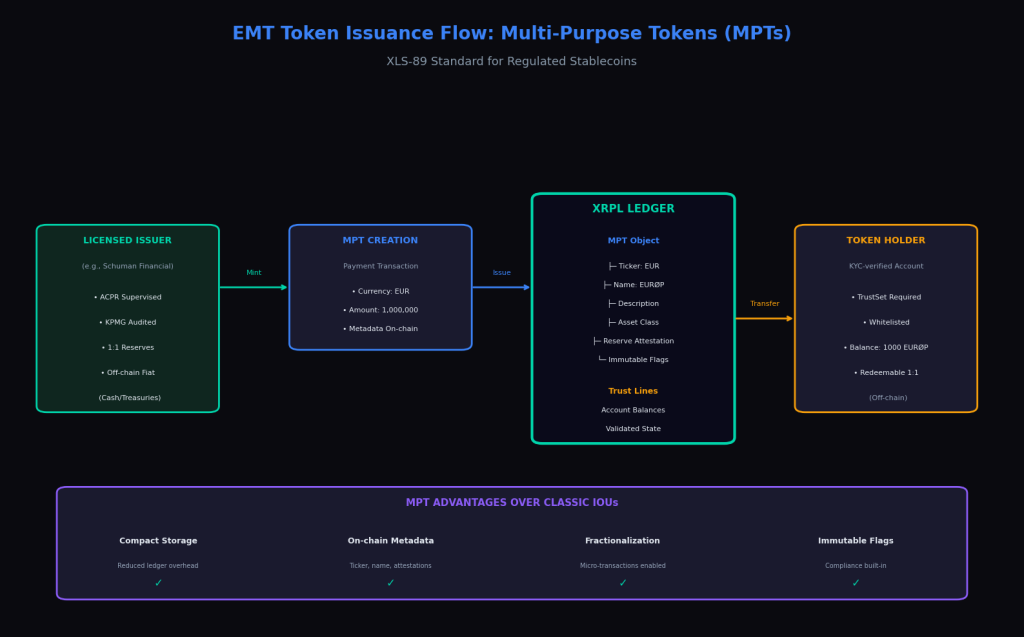
Token Model: Issued Currencies and Multi-Purpose Tokens (MPTs). Stablecoins exist as issued currencies (IOUs) or the newer Multi-Purpose Tokens (MPTs) standard (activated ~2025, XLS-89).
- Issuance: The issuer’s account sends a Payment transaction specifying the currency code (e.g., “EUR” for EURØP) and amount. Tokens credit holders’ trust lines. The issuer maintains 1:1 off-chain reserves (cash, treasuries) and handles minting/redemption.
- MPTs (preferred for regulated use): These compact objects embed on-chain metadata (ticker, name, description, asset class, reserve attestations) directly in the ledger. They support fractionalization, immutable metadata, and built-in flags for compliance. MPTs reduce storage overhead compared to classic IOUs and are optimized for stablecoins, RWAs, and yield-bearing tokens. xrpl.org
Trust Lines and Holder Controls
Users cannot hold issuer tokens without explicitly creating a Trust Line via a TrustSet transaction. This:
- Prevents spam and accidental exposure.
- Gives issuers granular control (e.g., via Require Auth flag to whitelist only KYC’d/approved accounts).
Require Auth enforces regulatory whitelisting—perfect for EMT compliance where only verified entities may hold tokens. Other issuer flags include:
- Default Ripple (enables rippling for seamless transfers).
- Disallow Incoming Trust Line (prevents unauthorized issuance).
- Transfer Fee (optional burn fee to reduce circulating supply).
- Tick Size (controls DEX pricing precision). xrpl.org
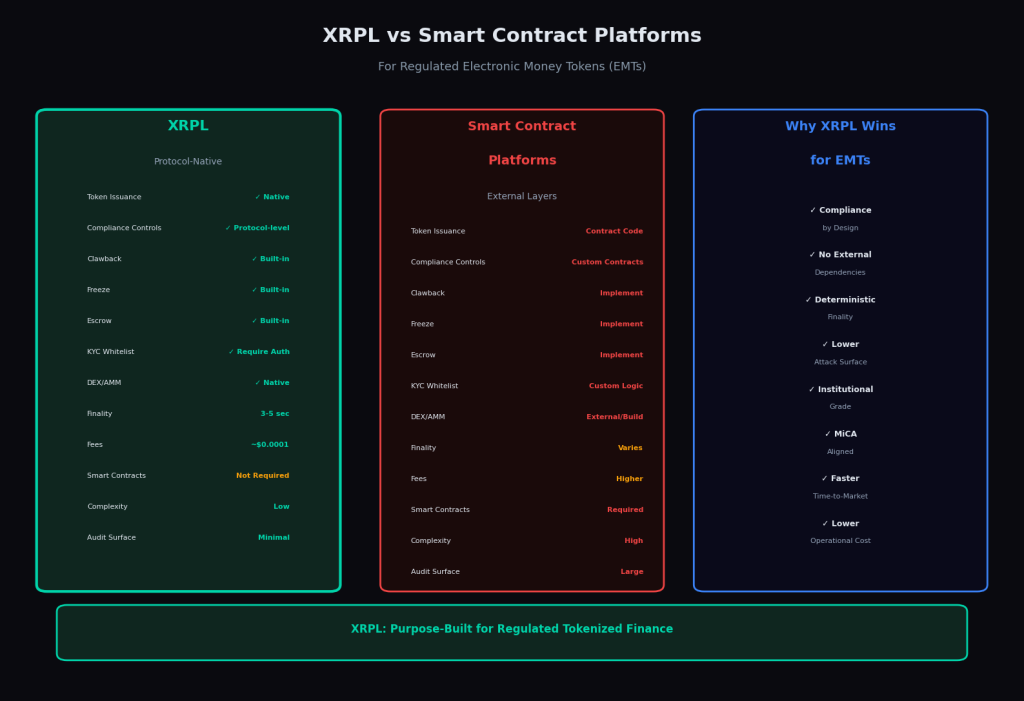
Native Regulatory Primitives: Clawback, Freeze, and EscrowThese protocol-level features make XRPL uniquely suited for regulated EMTs.
- Clawback (Clawback amendment, XLS-39): Issuers enable Allow Clawback (or Can Clawback for MPTs) on their account before issuance. They then issue a Clawback transaction to reclaim any amount from a specific trust line or MPT holding. Use cases include fraud reversal, sanctioned addresses, lost-account recovery, or regulatory enforcement. Clawback applies only to issuer-controlled tokens (not XRP) and is optional but essential for stablecoin issuers facing legal obligations. xrpl.org +1
- Freeze (individual or global): Issuers can freeze tokens in specific accounts (e.g., during investigations) without affecting the entire supply.
- Token Escrow (XLS-85, activated February 2026): Extends classic XRP Escrow to all issued tokens and MPTs. Tokens lock conditionally (time-based or crypto-condition) and release only when criteria are met. Regulated issuers use this for compliant settlements, collateral holds, vesting, or conditional payments in stablecoin workflows. Issuers control escrow enablement via flags. cryptoslate.com
These are native ledger objects—no smart contracts required for basic compliance.
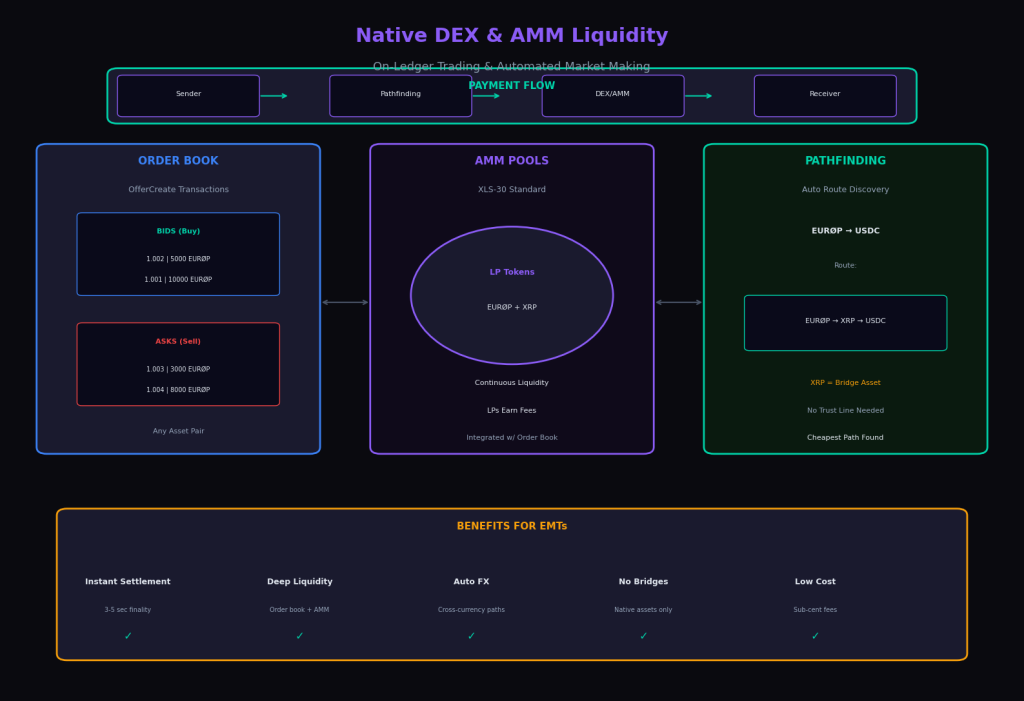
Liquidity and Transfers: Built-in DEX + AMMXRPL’s decentralized exchange is on-ledger:
- Offers (OfferCreate) create order books between any two assets.
- Pathfinding automatically finds the cheapest multi-hop route (e.g., EURØP → XRP → another stablecoin), using XRP as the universal bridge asset (no trust line needed).
- Automated Market Makers (AMM, XLS-30) provide continuous liquidity pools. Liquidity providers deposit pairs (e.g., stablecoin and XRP) and earn fees. AMMs integrate seamlessly with the order book for deep, efficient trading.
This enables instant, low-cost EMT transfers, FX, and DeFi without bridges for native XRPL stablecoins. Cross-chain support comes via the XRPL EVM Sidechain (Ethereum-compatible) and bridges like Axelar. Why This Architecture Excels for Regulated EMTs
- Compliance by design: Clawback, Require Auth, Freeze, Token Escrow, and MPT metadata provide enforceable controls while preserving decentralization for non-issuer assets.
- Transparency & auditability: All issuance, transfers, and reserves (linked via metadata) are public and immutable.
- Efficiency: 3–5s settlement, negligible fees, and native interoperability outperform many Layer-1s for payments and tokenized finance.
- MiCA alignment: Licensed issuers (e.g., Schuman Financial for EURØP) handle reserve backing, redemption at par, and AML/KYC off-chain. XRPL supplies the fast, controlled on-chain rail.
Additional ecosystem tools
Credentials for identity verification, future Hooks/Extensions for programmability, and the EVM sidechain—further expand regulated DeFi use cases like lending or tokenized treasuries without compromising core stability. In short, XRPL’s architecture turns regulated EMT stablecoins into fast, liquid, auditable digital money that institutions can trust. It combines protocol-native controls with the speed and cost advantages that traditional finance demands, positioning XRPL as a leading infrastructure for compliant tokenized assets in 2026 and beyond.