Thesis. The 2024/2026 AI cycle is the largest fixed capital investment cycle in modern economic history. The market question is no longer Will AI transform the economy? but “Who bears the capex risk, and at what rate of return?” Humanoid robotics and converging technologies (MANBRIC: Metaverse AI Nano Bio Robotics Info Cognition the extended NBIC family) are derivatives of this cycle: real bets on productivity, still at the learning curve stage.
Key data.
• Data center capex in 2026: ~$850 bn (Morgan Stanley estimate, “we are only at 10/15% of projected demand”); rising to $1,000 1,500 bn in 2027 and up to $1,500 bn in 2028; Goldman Sachs (supply side model): ~$765 bn in 2026 and ~$7,600 bn cumulatively by 2031. Alphabet raised its 2026 forecast to $195 205 bn (August 2026).
• Energy constraint: data center electricity consumption ~485 TWh (2025) ~950 TWh (2030) (IEA); demand from “AI” centers +50% in one year; energy not silicon is the marginal bottleneck.
• Credit risk: financing for this cycle increasingly flows through private credit, with two overlapping AI risk channels (overexposure to data center assets and correlation among borrowers relying on the same thesis) a subject we have already covered in our columns.
• Humanoid robotics: 2025 VC funding ~ $4.3 bn (total robotics > $8.5 bn); verified deployments: Figure 03 at BMW Spartanburg (1,250+ hours, 90,000+ parts, >99% [accuracy]); long term market estimates: $38 bn (2035), $152 bn (2040) (Morgan Stanley) treat both cautiously (4× gap = uncertainty around the adoption rate).
• Biotech/convergence: the “bio” leg of MANBRIC is driven by generative AI applied to molecule discovery and sequencing (compressing R&D cycles); an early signal, but venture capital is increasing.
Quantitative framework.
- Capex profitability test: to justify ~$850 bn/year, AI must generate an annual incremental margin flow of around $250 400 bn (assumptions: required ROIC of 12/15%, GPU depreciation over 4/5 years). As long as the “incremental AI revenue / capex” ratio remains below ~0.3, the cycle is driven by expectations, not cash flow. Monitoring this ratio quarterly is the only filter that matters.
- Robotics unit economics: tipping point = total robot cost (amortized CAPEX of
€130k over 5 years + OPEX) < fully loaded cost of a two-shift position (€70/90k/year in Europe). At 2,000 documented productive hours/year (Figure/BMW), an 18/24 month payback is achievable for repetitive material-handling tasks; it is not yet achievable for fine manipulation across multiple contexts. Adoption follows an S-curve, and we are at the lower inflection point: 2026 = proof of ROI; 2027/2028 = volume orders. - Energy as a limiting factor: +465 TWh by 2030 ≈ adding the electricity consumption of a country such as Japan. Any AI strategy without an energy component (PPAs, SMRs, grids) is incomplete which explains the rationale behind our business idea no. 3.
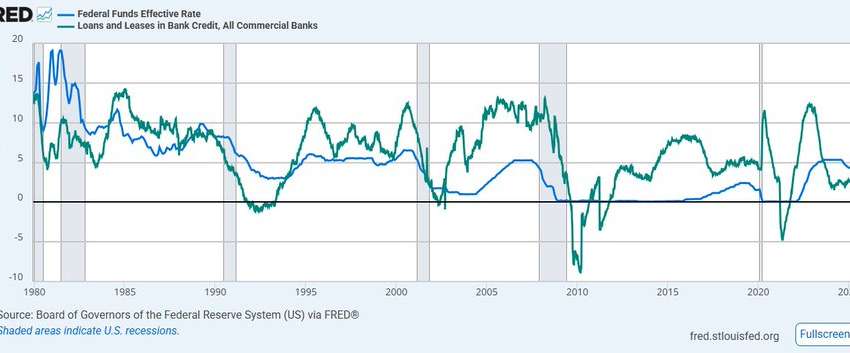
Risks. Accelerated GPU depreciation (obsolescence before debt maturity); circular financing (suppliers financing customers); concentration risk: a handful of frontier labs (OpenAI, Anthropic) as ultimate tenants of flagship projects; reliability of humanoid figures (massive gap between marketing and audited data require documented operating hours); interest-rate risk: the cycle is financed at high long-term rates (highest since 2007).
Allocation implications. Play the cycle through cash flow generating picks and shovels (energy, cooling, networks, HBM chips) rather than growth multiple applications; robotics: favor vendors with documented paying customers (Figure, Agility) over promises of volume; in AI private credit: require DSCR covenants and collateral in real assets (not GPU goodwill), and stress-test at +300 bps.
KPIs to monitor. Incremental AI revenue/capex ratio for hyperscalers; documented humanoid operating hours; spot electricity prices at data center hubs (Virginia, Texas, Ireland); default rates of data center SPVs in private credit; average grid connection lead time (the real bottleneck).