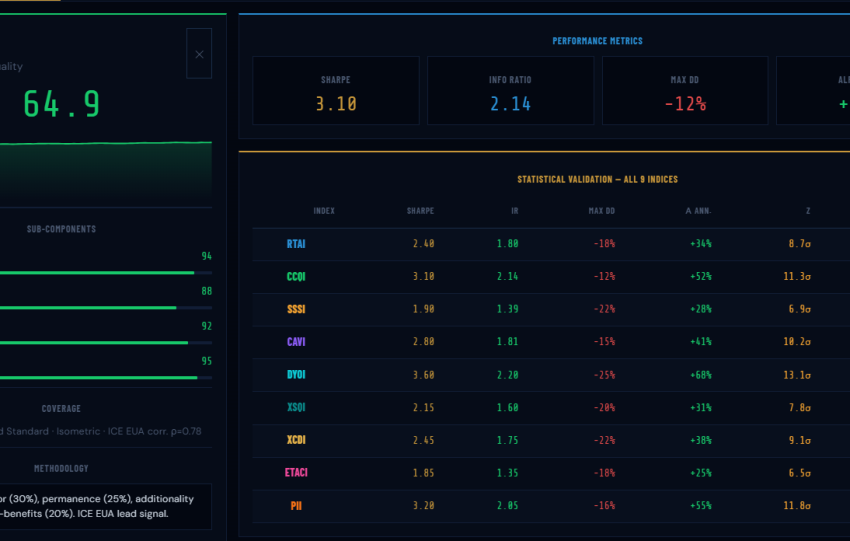
1.1 Adaptation of the Merton Model: Adjustment of the Probability of Default (PD) using the CCQI Index
The integration of the CCQI Index into credit risk models relies on adapting the structural framework of Merton (1974), where a borrower's Probability of Default (PD) is determined by the distance between the value of their assets and…

CCQI index and characterization of TCMs: Tracking Tokenization of RWAs and Carbon Credits
1.1 Methodology for the STEELLDY CCQI (Climate Credit Quality Index)
1.1.1 Definition and Objectives of the Index: Carbon Credit Quality Benchmark for the Voluntary Market
The Climate Credit Quality Index (CCQI), developed by STEELLDY, is a proprietary benchmark for the quality of…
The Core Carbon Principles (CCP), established by the Integrity Council for the Voluntary Carbon Market (ICVCM), constitute the most stringent quality benchmark in the carbon market. CCP-qualified credits must satisfy three fundamental criteria: additionality (the emission reductions would not have occurred without the financial incentive of the carbon credit), permanence (the reductions are irreversible over…
The tokenization of carbon credits is based on a layered technological architecture that ensures interoperability between traditional carbon credit registries and blockchain infrastructures. The typical protocol involves: (i) the verification and custody of carbon credits in a traditional registry account; (ii) the issuance of representative tokens on a public or permissioned blockchain, with a 1:1…
Décarbonisation