Analyse de marché
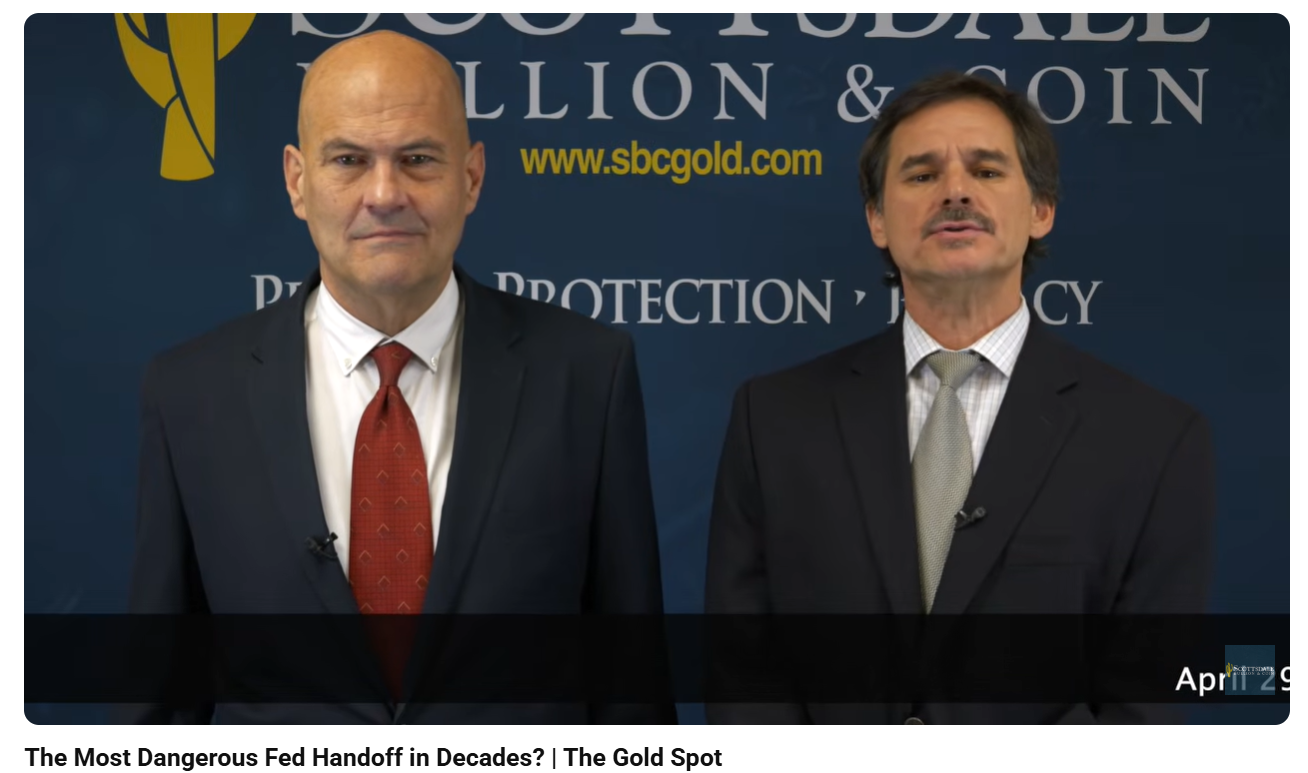
Tune in to this week’s The Gold Spot as Scottsdale Bullion & Coin Precious Metals Advisors Damian White and Tim Murphy break down the link between new Fed leadership and economic downturns, what drives this recurring pattern, and why Kevin Warsh may be facing the toughest setup yet.
The audio examines the recurring pattern of significant market downturns coinciding with changes in the leadership of the US Federal Reserve (Fed) since its founding in 1914. This apparent correlation is discussed as a combination of unfortunate timing and deeper structural issues within the economy.
Historical examples illustrate this trend: Alan Greenspan began his tenure in 1987 just before the “Black Monday” stock market crash. Ben Bernanke took the helm in 2006 as the housing market instability escalated, leading to the Global Financial Crisis. Janet Yellen‘s tenure saw the first interest rate hikes following the crisis cause economic jolts. Jerome Powell‘s term began in 2018 amidst a late-stage expansion, and his tightening cycle was soon followed by the COVID-19-induced market collapse, which in turn led to high inflation and aggressive rate hikes. The underlying cause of these cycles is argued to be beyond the Fed’s direct control.
The Fed’s tools—setting interest rates and managing its balance sheet—are insufficient to counteract the issues stemming from a freely floating currency, which lacks intrinsic value and is prone to inflation, excessive money creation, and overspending, leading to market swings between risk-on growth and risk-off uncertainty.
Since the average economic cycle is five to six years and a Fed Chair serves four years, new leadership is statistically likely to take over as risks are already escalating. The incoming Fed Chair nominee, Kevin Warsh, is entering what is described as the most challenging macroeconomic and political environment of any predecessor. He assumes control at a late-cycle peak (since 2020), faces a national debt nearing $40 trillion (with soaring interest payments now costing about $1 trillion annually), intends to shrink the Fed’s large balance sheet amid rate-sensitive markets, and operates under genuine political pressure, following direct interference attempts by President Trump.
The culmination of these factors—overvalued markets, massive debt, and weakened institutional independence—suggests an impending collapse of what is termed the “everything bubble,” raising concerns about the severity of the impact on investors.