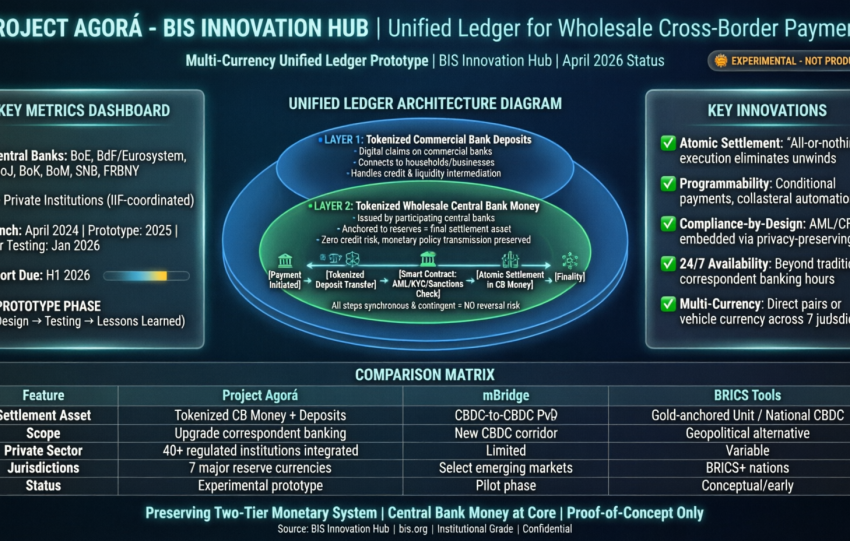
Project Agorá, launched in April 2024 by the BIS Innovation Hub, is its largest public-private collaboration, testing a multi-currency unified ledger for wholesale cross-border payments. It builds on the BIS's "unified ledger" concept, exploring how tokenization and programmability can modernize correspondent banking without replacing the two-tier monetary system (commercial banks and central banks).
This…
Tech
Toute l'actualité de la tech et des médias en France et dans le monde (innovations, évolutions, marché et consommation, scandales). Vidéos, analyses, commentaires et interviews.
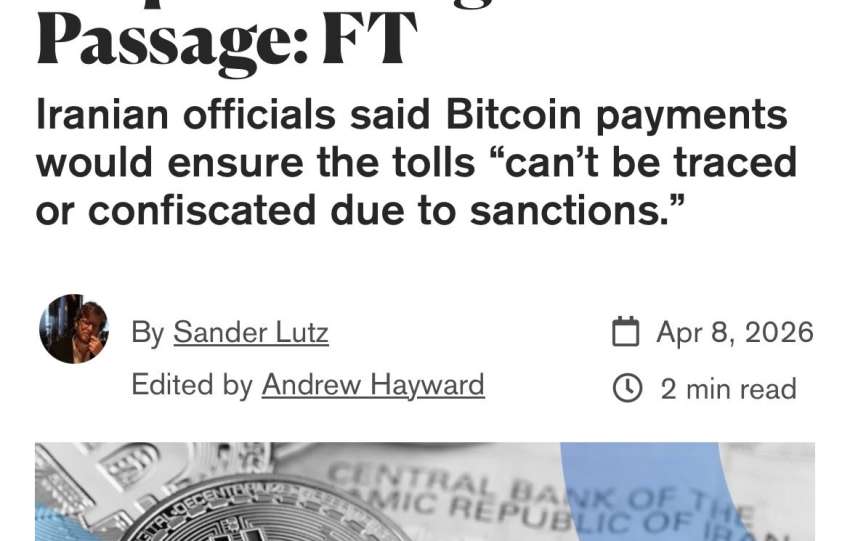
The information, factually confirmed by multi-source convergence (including the Financial Times of April 8, 2026), establishes that Iran now demands payments in cryptocurrencies (BTC, stablecoins) and in Yuan for oil transit through the Strait of Hormuz, completely bypassing SWIFT.
This mechanism, controlled by the IRGC, sets a rate of $1 per barrel, creating an…
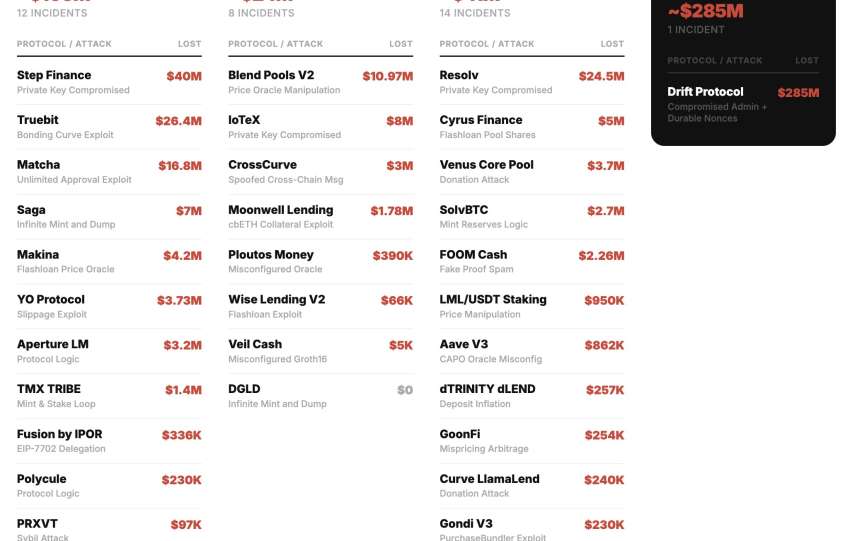
Thirty-five DeFi protocol hacks in early 2026 caused over $453 million in losses, according to several analysts. January (12 incidents, $103M), February (8, $24M), March (14, $41M), and April (one major event, $285M) make up this breakdown. Notable exploits cited include Step Finance (private key) and Drift Protocol on Solana (admin keys). Common attack vectors…
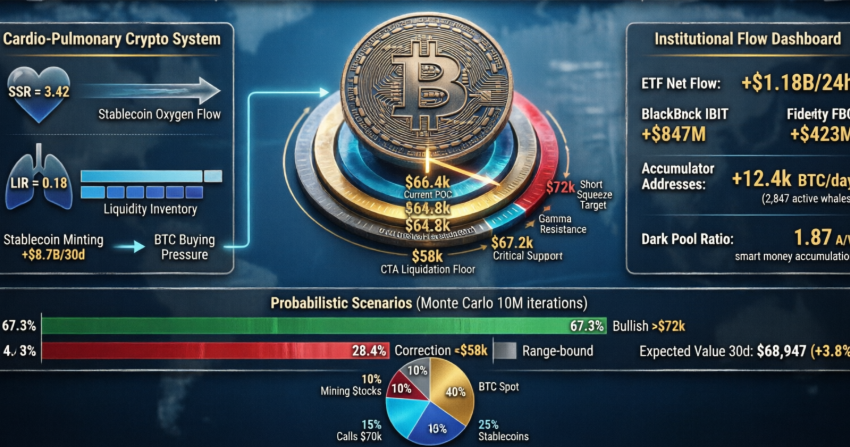
Les 24 checkpoints on-chain (UTC). Automation via Steelldy OSINT 4.2
HeureModuleIndicateurSeuil alerteValeur 02/04Action bot00:00GlassnodeSSR< 2.5 (bull), > 5.0 (bear)3.42🟢 Neutre01:00CryptoQuantNet Minting 24h>$1B+$340M🟡 Surveillance02:00Steelldy PaExchange Reserves BTCHausse soudaine-1,847 BTC/j🔴 Sortie03:00Steelldy SPNarratif "Regulation"Volume >2σBas🟢04:00Steelldy v3.1ETF Net Flow (US open)>$500MEn attente-05:00Steelldy v3.2CTA Liquidation Risk>2M contrats2.4M🔴 Alert06:00Steeelldy v3.1HFT Cluster C1Cassure $64.8kStable🟢07:00Steelldy v2.3DXY Corrélationρ < -0.8-0.74🟡08:00Steelldy v3.1Sentiment Social<-0.5 (fear)+0.12🟢09:00SantimentWhale Accumulation>10k…
Project Agorá (Greek for “marketplace”) is a major BIS Innovation Hub initiative launched in April 2024. It is a public-private collaboration exploring the tokenization of wholesale central bank money (wCBDC or tokenized reserves) and commercial bank deposits on a multi-currency unified ledger—a programmable platform—to improve wholesale cross-border payments while preserving the two-tier monetary system (central…
CBDC interoperability challenges—particularly in hybrid setups like the Société Générale–Forge/Banque de France (BdF) 2024 repo pilot and ongoing Les Gardiennes/UBS collaborations—stem from bridging public Ethereum (permissionless, for tokenized collateral like bonds or uMINT funds) with proprietary/permissioned CBDC ledgers (e.g., BdF’s DL3S on Hyperledger Fabric). These pilots use mechanisms like Hashed Timelock Contracts (HTLCs), APIs, and…
Technical details on smart contracts for Ethereum-based repo tokenization pilots (e.g., Société Générale–Forge/Banque de France 2024 repo, UBS, Les Gardiennes collaborations, and related UBS uMINT/Project Guardian work) are not fully open-sourced or published in complete audited code form. These are institutional, regulated deployments focused on compliance, so details come from whitepapers, audits, press releases, and…
Ethereum-based repo (repurchase agreement) tokenization pilots are primarily led by major European and Swiss institutions, building on 2024 experiments and advancing into collaborative explorations and deployments by early 2026. These focus on using Ethereum's public blockchain for collateral (e.g., tokenized bonds or funds), with interoperability to central bank systems for CBDC settlement, aiming to automate…
It forms part of the FSB’s broader work on non-bank financial intermediation (NBFI) resilience and assesses structural risks in the repo (repurchase agreement) markets backed by government bonds—the dominant segment of the global repo market.
Market Size and Composition (as of end-2024)
Government bond-backed repo outstanding totaled approximately $16 trillion, representing roughly 80% of…
1. Cadre conceptuel. L’interopérabilité stablecoins-RWA comme condition sine qua non du scaling de la finance parallèle
L’interopérabilité entre stablecoins (USDT/USDC dominance >85 % du marché, MC ~300 Md$ au 27/03/2026) et RWA tokenisés (TVL distribuée ~26,63 Md$ ex-stablecoins, rwa.xyz) constitue le pont programmable entre liquidité fiat-native et actifs réels fractionnables. Elle transforme les stablecoins…