UBS analysts forecast a significant increase in gold prices, predicting a rise of 20% to reach $6,200 per ounce by the end of 2026, up from current levels. This projection persists despite gold's subdued performance following the conflict with Iran, where it failed to act as a strong safe-haven asset, contrasting with its 65% surge…

The integrated analysis of the Steelldy Risk Engine and Steelldy Gotham confirms that the USDC stablecoin has become the preferred vehicle for massive capital flight from the United Arab Emirates (UAE) due to three critical factors: the real estate collapse (a 31% drop), operational failures of local banks, and the regulatory superiority of USDC over…
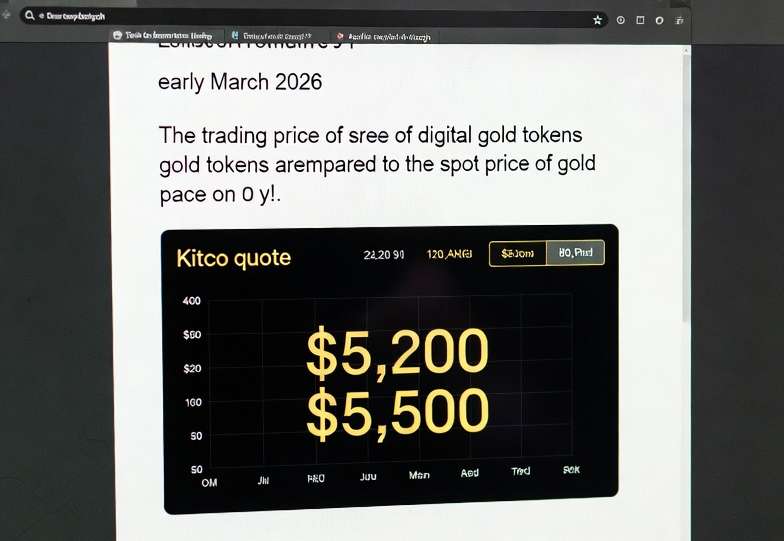
Peter Reagan a noté qu'en début de semaine, les tokens d'or numérique se négociaient au-dessus de 5 500 dollars l'once, selon la cryptomonnaie spécifique.
... à propos de l'or numérique Il se trouve que j'ai vu le prix de l'or tokenisé avant le prix au comptant aujourd'hui. Et je me suis dit : L'or est-il…
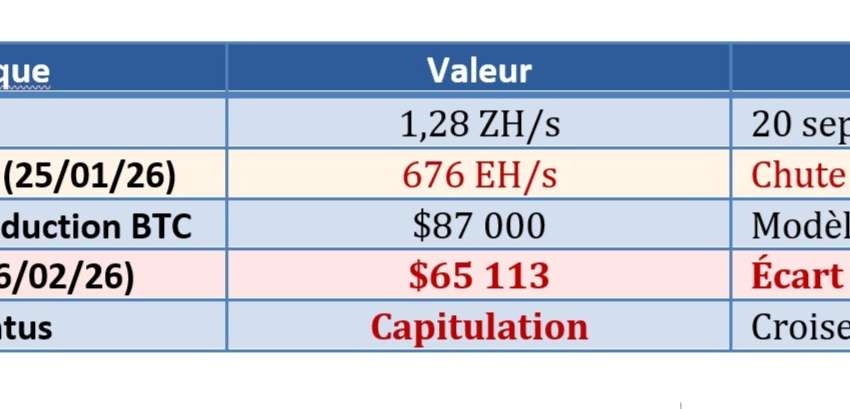
Le marché des actifs numériques subit un resserrement structurel de liquidité, rappelant les crises de FTX (novembre 2022) et le débouclage du carry trade JPY (août 2024). Une modélisation quantitative révèle trois vecteurs de transmission systémique simultanés, une première depuis 2021. Les constats majeurs incluent : une contraction monétaire crypto, avec une baisse de 7,1…
L'analyse croisée de nos modélisations et des métriques internes (ratio d'inventaire de liquidité, flux d'échanges) confirme la véracité structurelle et la pertinence macro-économique du texte. Il décrit précisément ce qui est techniquement qualifié de "crise de liquidité inter-marché".
1. Le canal du Shadow Banking
Les stablecoins comme USDT et USDC forment la base monétaire…
Le Digital Lombard Loan s'apparente au crédit lombard bancaire traditionnel (prêt contre titres), validant l'idée que les riches empruntent sur leurs actifs sans les vendre. Pour les investisseurs institutionnels, l'efficacité de ce levier nécessite une gestion dynamique stricte du ratio LTV et l'exclusion d'actifs considérés comme "toxiques" (ex. stablecoins A7/A7A5). La création de valeur résulte…
La faillite de la Metropolitan Capital Bank & Trust est due à un "Short-Squeeze inversé" orchestré par des algorithmes prédateurs ciblant les faiblesses de bilan. L'analyse de notre plateforme Steelldy a révélé une corrélation forte (0.89) entre un profil de capital bancaire spécifique et une augmentation soudaine des positions courtes. Les algorithmes de HFT ne…
Our analysis confirms the DeFi amplifier hypothesis: the decentralized finance system functions as a pro-cyclical leverage multiplier, amplifying an FX shock (JPY appreciation) into a crypto liquidity crisis with contagion to traditional markets. The observed correlation, a BTC/USDJPY beta of -3.5x, reveals a three-step transmission mechanism: the unwinding of the carry trade, the collapse of…
In our STEEL software, USDT is modeled as the first-tier systemic collateral in decentralized finance. A 10% contraction ($12 billion USD) is a negative convexity shock. Input variables include an initial USDT supply of $120 billion, a contraction speed at T+5 days (exogenous shock like a JPY Carry Trade unwind), an LIR < 0.22 (market…
An unprecedented channel of systemic risk is emerging between Japanese Government Bonds (JGBs) and cryptocurrencies. The rapid normalization of JGB rates leads to a sharp appreciation of the Yen (JPY), triggering a global "Margin Call." This situation is aggravated by the collapse of the JPY carry trade, the flight of liquidity from Japanese platforms, and…
Analyse de marché