1.1 Direct Ownership Tokens
1.1.1 On-chain Representation of Carbon Credits Held in Custody by the Investor
Direct ownership tokens constitute the most fundamental form of carbon credit tokenization, representing a digital claim on a physical carbon credit held in custody by an accredited custodian. This structure ensures a one-to-one correspondence between the issued token and…

The gradual shift of the XRP Ledger (XRPL) from a simple payment network to a true institutional settlement layer (RWA, tokenization, interbank cross-border settlements) is empirically observable.
J.P Morgan recently revealed its utilization of the XRPL.✅ Up next? 🙇♂️ Goldman Sachs and Citi.😏💨 https://t.co/nCu062uXxz — SMQKE (@SMQKEDQG) May 9, 2026
Quantitative Validation Elements …
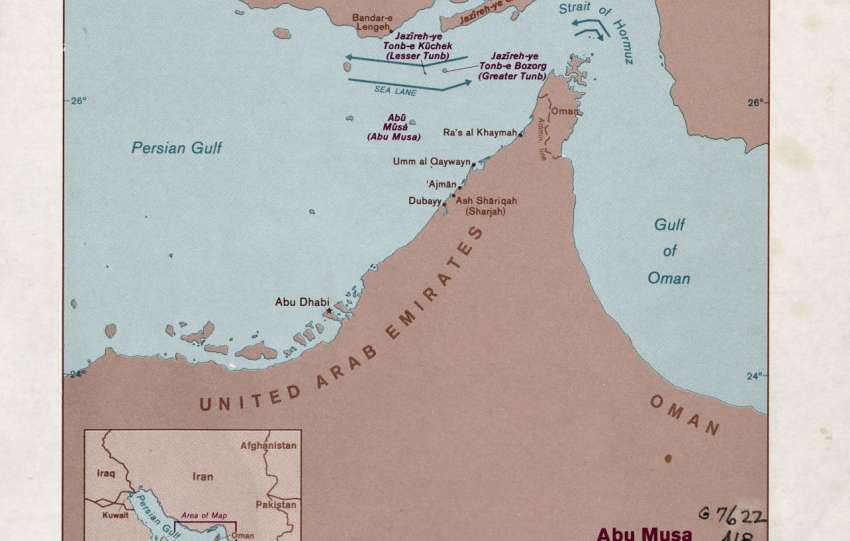
L’escalade militaire entre les États-Unis et l’Iran, initiée fin février 2026, a déclenché une reconfiguration structurelle du système financier mondial. L’Iran a monétisé le détroit d’Ormuz en imposant un péage de $2 millions par passage de pétrolier, payable exclusivement en yuans chinois ou en USDT sur le réseau Tron . Cette décision transforme un conflit régional en arme de destruction massive contre le système…
Project Agorá (Greek for “marketplace”) is a major BIS Innovation Hub initiative launched in April 2024. It is a public-private collaboration exploring the tokenization of wholesale central bank money (wCBDC or tokenized reserves) and commercial bank deposits on a multi-currency unified ledger—a programmable platform—to improve wholesale cross-border payments while preserving the two-tier monetary system (central…
Ethereum-based repo (repurchase agreement) tokenization pilots are primarily led by major European and Swiss institutions, building on 2024 experiments and advancing into collaborative explorations and deployments by early 2026. These focus on using Ethereum's public blockchain for collateral (e.g., tokenized bonds or funds), with interoperability to central bank systems for CBDC settlement, aiming to automate…
1. Introduction et contexte stratégique
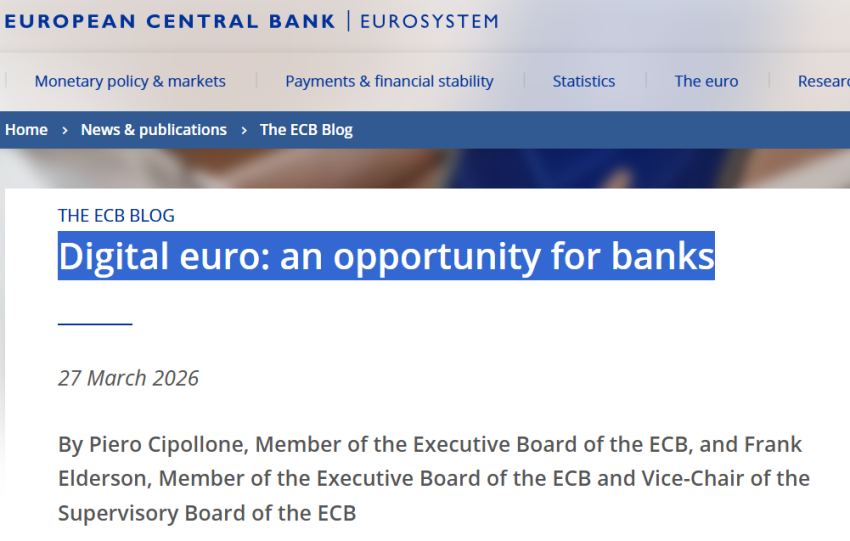
Le document de la BCE représente un tournant décisif dans l’architecture monétaire européenne. Pour un analyste quantitatif, ce texte ne doit pas être lu comme une simple déclaration d’intention, mais comme un shift structurel de paradigme où la monnaie de banque centrale (MoBC) entre en compétition directe (mais régulée) avec les solutions…
INTRODUCTION
Les pays du BRICS cherchent à se défaire du dollar américain pour leurs transactions internationales, intégrant l'or dans un nouveau mécanisme de règlement. Un projet pilote nommé Unit, une monnaie numérique adossée à l'or, a été lancé en phase de test au sein du bloc BRICS+ (les dix pays) le 31 octobre 2025, avec…
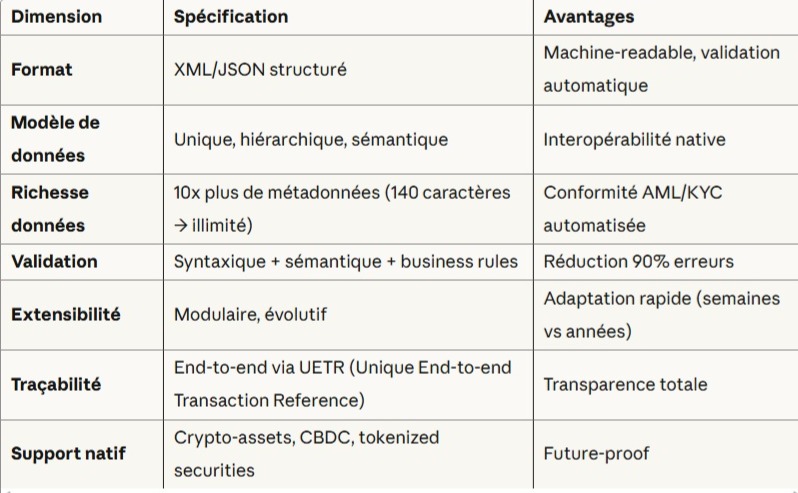
La migration ISO 20022 est une modernisation structurelle majeure, bien au-delà d'une simple mise à jour technique, annonçant l'émergence d'un "Internet de la valeur" où ce standard devient un langage universel, facilitant l'interopérabilité entre blockchains et finance traditionnelle.
Cette transformation, dont le 22 novembre 2025 marque le "Day One" d'un cycle de cinq ans,…
This analysis causally links macro-geopolitics (de-dollarization) to micro-speculation (AI bubble) and our investment thesis (Fed Pivot). The analysis of the text and image (de-dollarization) confirms that the financial environment is not stable, but its fragility is the driver of our opportunity.
MACRO & FINANCIAL ANALYSIS: DEDOLLARIZATION, DRIVER OF THE AI PIVOT AND BUBBLE
…
A. Membres actifs (Full Participants)
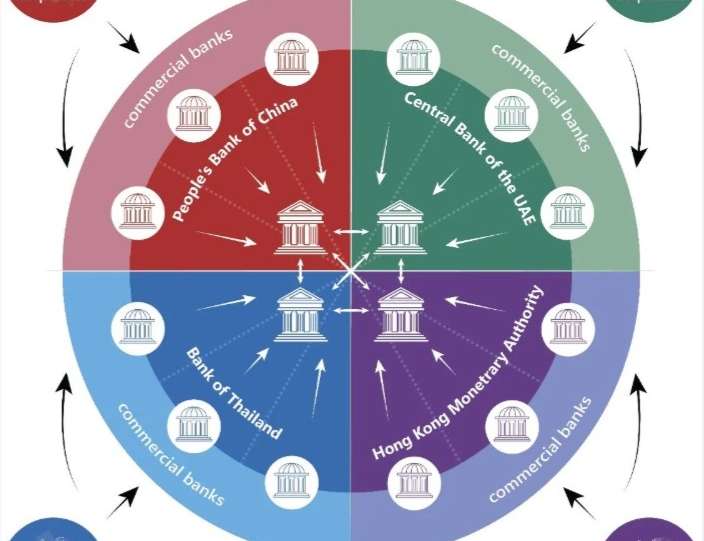
1. Digital Currency Institute, People's Bank of China (PBOC)
Rôle : Leader de facto du projet.
Actif déployé : e-CNY (yuan numérique)
Lancé : pilote 2020, expansion 2021-2025
Adoption domestique : 260 millions utilisateurs (2025)
Volume : 7 trillions CNY (~1 trillion USD) cumulés depuis 2020
Avantage stratégique : durant…
Décarbonisation
Analyse de marché