Analyse de marché
Direct investing, or direct deals, is the practice where investors like family offices or high-net-worth individuals commit capital directly into private companies or assets, bypassing traditional private equity (PE) funds where a General Partner (GP) manages the portfolio. This trend is accelerating, evidenced by family offices significantly shifting allocations away from funds toward direct deals, often motivated by concerns that outsourcing compromises net returns.
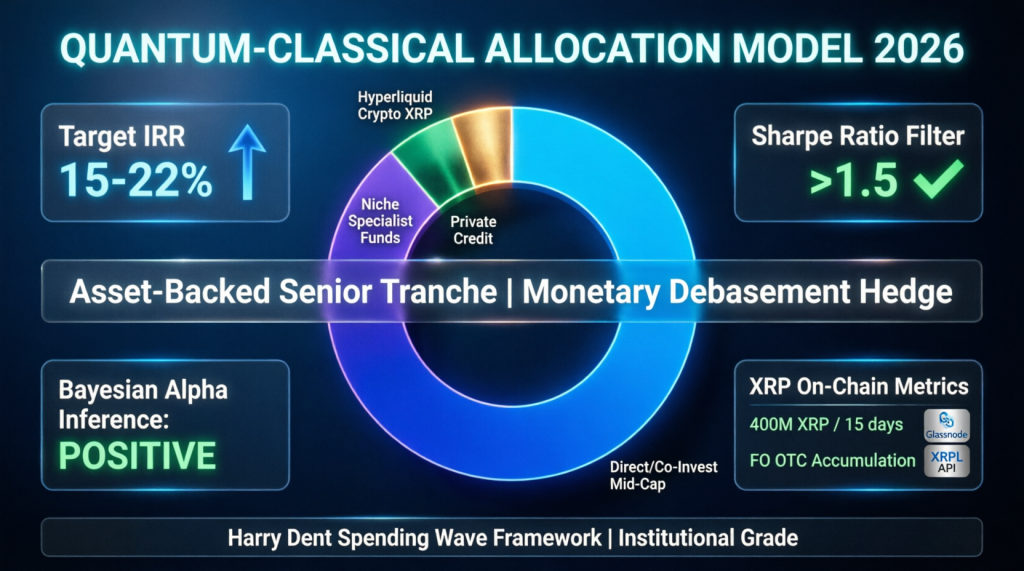
The primary advantages driving this shift include significantly lower fees and higher net returns, as direct deals eliminate the typical “2-and-20” fee structure common in PE funds, drastically reducing cost drag. Investors retain more of the gross returns by only incurring deal-specific costs like due diligence and legal expenses.
Direct investing also grants greater control and customization. Investors select specific companies according to their own timeline, risk profile, and values, without the constraints of a PE fund’s “blind pool.” This allows for direct negotiation of governance terms, exit strategies, and deal structure.
Furthermore, direct investment offers flexibility through “permanent capital,” removing fund lockup periods (often 7–10+ years) and forced sales, enabling long-term compounding or holding through market cycles. Transparency and alignment are enhanced through direct ownership, providing investors immediate visibility into operations and direct relationships with management teams. This approach leverages the relational strengths of family offices, enabling them to source proprietary deals through personal or multigenerational networks that institutional funds might miss.
Family offices often collaborate via co-investments to share due diligence burdens and access better deals, frequently applying operational expertise from their own businesses to add value to portfolio companies. Some research suggests solo direct deals can outperform fund benchmarks in Internal Rate of Return (IRR) due to fee savings and heightened selectivity.
However, direct investing requires strong internal capabilities for sourcing, diligence, and monitoring, making it unsuitable if an investor lacks the necessary resources, leading many to still utilize specialist funds for out-of-expertise areas. Deal flow can also be less consistent, and diversification is more challenging than within a broad PE fund portfolio. Nonetheless, industry analysis indicates this shift toward direct deals is a structural change, fueled by a desire to escape high fees and lockups, and the recognition that relational advantages are key competitive assets in private markets.
Direct investing and co-investing allow sophisticated investors, like family offices, to bypass traditional Private Equity (PE) funds for direct exposure to private assets. Direct investing involves the investor sourcing, leading, negotiating, and managing the deal independently, offering maximum control, alignment with family values, no fee drag, access to proprietary deals, and a long-term focus, but it demands significant internal resources and operational load. Co-investing means investing alongside a lead sponsor (usually a PE fund) on one of their deals; the GP handles sourcing and diligence, giving the investor a direct stake with lower barriers to entry, fee efficiency, risk sharing, and speed. Co-investing is often a stepping stone for building expertise. Club deals, where multiple family offices pool capital, represent a hybrid approach. Family offices are increasingly blending co-investments—often grouped with direct deals due to direct asset ownership—as a path to scaling up to full direct investments where control and higher returns are sought. The choice depends on the investor’s resources, network strength, and desired level of involvement; many utilize both strategies alongside traditional fund commitments for optimized risk and return.
Side-by-Side Comparison
| Aspect | Direct Investing | Co-Investing |
|---|---|---|
| Who Leads? | You (family office originates & controls) | GP/sponsor leads; you participate |
| Fees | Minimal/none (just deal-specific legal/diligence costs) | Usually no management fee or carry (or heavily reduced); sometimes requires fund commitment |
| Control/Governance | Full: Set terms, board seats, strategy, exits | Limited: Minority rights (veto/tag-along/info rights), but GP drives decisions |
| Deal Sourcing | Your networks/proactive origination (harder, more proprietary) | Via GP relationships (easier access to vetted deals) |
| Operational Burden | High: Full diligence, monitoring, ops value-add | Moderate: Leverage GP’s team/expertise |
| Diversification | Low (concentrated single deals) | Low per deal, but easier to scale across multiple GPs |
| Risk Profile | Higher execution/operational risk; full upside/downside | Shared risk with GP; potential adverse selection (GPs may offer “leftover” deals) |
| Typical Hold Period | Flexible (“permanent capital” — hold forever if desired) | Often tied to GP’s fund timeline (though you own the asset directly) |
| Returns Potential | Higher net potential via fees saved + family expertise/alignment | Often net outperform funds due to fee savings; some studies show strong IRR |

Club deal governance establishes the formal rules for multiple family offices collaborating on private investments, aiming to achieve the control and efficiency of direct deals while minimizing disputes. Unlike fixed fund structures, club deal governance relies on peer-negotiated agreements, critical given diverse family office expertise and risk tolerances. The legal architecture centers on a Special Purpose Vehicle (SPV), usually a Delaware LLC, isolated by an SPV Operating Agreement (internal rules) and a comprehensive Shareholders’/Co-Investment Agreement (the club’s constitution), which must be negotiated before capital commitment.
Key governance components negotiated include:
1. Leadership: Designating a lead/anchor family office responsible for sourcing and coordination, often managing the SPV.
2. Decision-Making: Differentiating between ordinary decisions (simple majority), major decisions (supermajority/unanimous), and reserved matters (requiring lead consent), with deadlock provisions essential.
3. Oversight: Allocating board seats or observer rights at the portfolio company level, and demanding high transparency through information rights at the SPV level, exceeding typical fund reporting.
4. Capital: Structures for capital calls, anti-dilution protection, and the fee structure (shared costs only, no management fees).
5. Liquidity: Implementing lock-up periods (2–5 years) alongside transfer mechanisms like ROFR/ROFO, tag-along, and drag-along rights to manage ownership changes.
6. Economics: Generally simpler profit waterfalls and no carried interest, prioritizing tax efficiency.
7. Contingency: Pre-agreed exit timelines and mandatory dispute resolution (mediation leading to arbitration). Compared to solo directs or GP-led co-investments, club deals feature negotiated control, stronger minority rights, and flexibility tied to the group partnership rather than a fund life. Current best practices emphasize starting with alignment workshops, employing experienced counsel early, building flexibility for future members, and subjecting governance documents to annual review. The trade-off is increased upfront negotiation time versus reduced post-deal friction. Ultimately, robust governance enables family offices to scale direct investing by combining peer trust with PE-level sophistication, favoring alignment and complementary expertise over equal stakes.